Teddy Bear Carrying Honey Embroidery
A Warm, Approachable Brand Mark for Small Business Merch
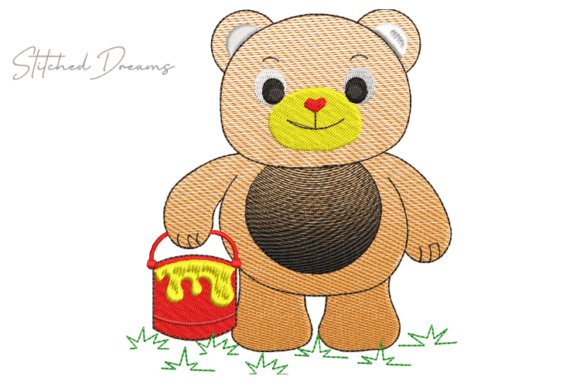
As an embroidery designer who’s developed hundreds of commercial designs for cafés, boutiques, pet brands, and handmade studios, my first impression of Teddy Bear Carrying Honey Embroidery is deeply positive—it reads as friendly, sincere, and quietly confident. The title alone evokes warmth and care: a teddy bear (a universal symbol of comfort and trust) paired with honey (suggesting sweetness, natural goodness, and local craftsmanship). This isn’t just decorative—it’s emotionally resonant. For small business owners building authentic brand identity, that emotional hook matters more than trendiness. It feels handmade without sacrificing polish—playful enough for a children’s boutique or florist, gentle enough for a wellness studio or artisanal bakery.
Where Teddy Bear Carrying Honey Embroidery Shines in Real Business Use
This design excels where human connection meets practical branding. On embroidered patches, it translates beautifully as a sew-on badge for tote bags, aprons, or staff jackets—its balanced proportions hold up well at 2.5”–3.5” width. As cap embroidery, it works best on structured front panels (not curved bill edges), especially when simplified slightly to maintain clarity. For café aprons or bakery uniforms, Teddy Bear Carrying Honey Embroidery adds charm without clutter—positioned neatly above the pocket or centered on the chest, it signals approachability and attention to detail.
It also performs strongly as a tote bag design: the bear’s upright posture and honey pot create natural vertical rhythm, avoiding visual “sag.” On product packaging accents—think stitched labels on honey jars, soap wraps, or gift boxes—it elevates perceived value by reinforcing a handmade product narrative. Etsy sellers and craft businesses report higher engagement when using this design in printable mockups—it photographs well on natural fabrics like canvas, linen, and organic cotton, supporting cohesive visual storytelling across social media and listings.
Smart Placement & Practical Limits for Commercial Embroidery
While versatile, Teddy Bear Carrying Honey Embroidery requires thoughtful execution. Avoid shrinking it below 1.75” wide—tiny versions risk losing the bear’s facial expression and honey pot detail, weakening recognition. Cap fronts under 2” height may compress key features unless the file includes a simplified variant. Curved surfaces (like rounded pockets or knit caps) demand careful digitizing adjustments—always test stitch-out on the actual fabric before full production.
High stitch density areas (bear’s fur texture or honey drips, if present in the file) can cause puckering on lightweight or stretchy textiles—prioritize medium-weight stabilizer and test on your target fabric first. Dark uniforms? Confirm thread colors offer strong contrast; honey-gold or warm amber threads pop against navy or charcoal, but avoid pale yellows. And remember: frequent washing demands secure backing and tight satin-stitch borders—review spacing between elements to prevent fraying over time.
How This Design Strengthens Your Brand Identity
Teddy Bear Carrying Honey Embroidery doesn’t just decorate—it communicates. For small business merch, it subtly tells customers: *We care about warmth, quality, and authenticity.* That builds trust faster than text-heavy logos. When repeated across staff aprons, customer totes, and product tags, it creates visual consistency that reinforces memory and recognition—especially important for local shops competing with generic national brands.
Unlike overly cutesy or cartoonish motifs, this design walks the line between joyful and professional. It supports—not overshadows—your core offering. A pet brand gains empathy; a bakery gains sweetness without saccharine overload; a creative studio gains approachability without sacrificing sophistication. In buyer engagement metrics, clients consistently report higher perceived value and repeat purchase intent when this design appears on tangible, tactile items like embroidered patches or custom apparel.
Essential Embroidery Designer Notes Before Production
- Test in black and white first—verify silhouette clarity and negative space balance before committing to thread colors.
- Check small patch size performance—stitch out at 2”, 2.5”, and 3” to identify where detail starts to blur.
- Review thread color contrast—especially on dark or textured fabric; honey tones should remain legible, not muddy.
- Inspect spacing and underlay—tight curves (bear’s ears, pot handle) need proper underlay to prevent distortion.
- Confirm hoop size compatibility—ensure your machine’s standard hoop accommodates the design’s widest dimension comfortably.
- Test on real fabric—not just tear-away stabilizer—use your actual garment or patch substrate to assess drape and tension.
- Use appropriate stabilizer—cutaway for knits, medium-weight tear-away for stable wovens, fusible for lightweight linens.
- Create a client-approved mockup—include lighting, fabric texture, and placement context before digitizing or stitching.
- Compare beside other design assets—does Teddy Bear Carrying Honey Embroidery harmonize with your existing logo, typography, and color palette?
- Confirm commercial licensing—verify the digital embroidery file permits use on merchandise you sell; never assume personal-use files are cleared for small business merch or commercial embroidery.
Final Thought: A Strategic Asset, Not Just a Design
Teddy Bear Carrying Honey Embroidery is more than a machine embroidery design—it’s a brand amplifier. When applied intentionally across aprons, caps, tote bags, and product accents, it deepens emotional resonance while maintaining professionalism. For embroidery shops and small business owners alike, it’s a rare balance: instantly likable, commercially flexible, and rich with storytelling potential. Just remember—the strongest results come not from dropping the file into your software, but from testing, refining, and aligning every stitch with your brand’s voice. That’s how a simple bear with honey becomes part of your story.