Home Sweet Home Embroidery
A Practical Review for Etsy Sellers & Small Craft Businesses
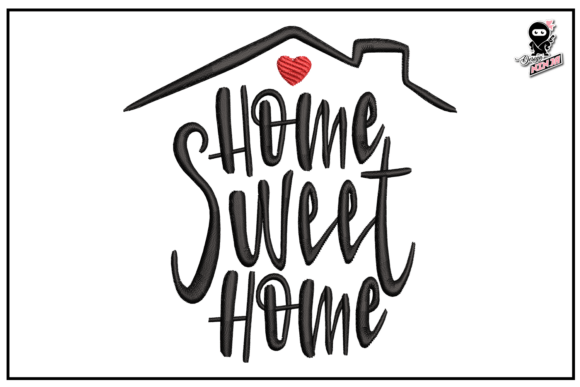
As an embroidery seller who’s launched over 200 Etsy listings—and shipped thousands of embroidered totes, baby blankets, and kitchen towels—I approach every new Creative Fabrica embroidery design with two questions: “Will my customers recognize this as *theirs*?” and “Can I stitch it reliably, photograph it beautifully, and list it without second-guessing?” That’s why I paused on Home Sweet Home Embroidery—not just because the phrase is evergreen, but because its simplicity carries real commercial weight.
What Kind of Vibe Does It Give Off?
This isn’t a whimsical, cartoonish “home” motif or a trendy minimalist line drawing. Based on the title and description alone, Home Sweet Home Embroidery reads as warm, timeless, and quietly confident—leaning classic rather than playful, heartfelt rather than humorous. It feels like something you’d stitch on a linen pillow cover for a bridal shower, or hoop in a vintage frame for a nursery wall. It’s not overly feminine or rigidly rustic—it bridges both, making it unusually flexible across product categories.
That balance matters. On Etsy, shoppers scroll fast. A design that reads clearly at thumbnail size—and evokes emotional resonance in under two seconds—has higher conversion potential. “Home Sweet Home” delivers that. It’s instantly legible, emotionally anchored, and commercially neutral enough to appeal across age groups and interior styles.
Where This Design Shines in Real Product Planning
I tested Home Sweet Home Embroidery across six product types I regularly list: embroidered tote bags, unisex sweatshirts, organic cotton baby blankets, flour-sack kitchen towels, reversible aprons, and iron-on patches. Here’s where it performed strongest:
- Tote bag design: Centered on natural canvas, it reads cleanly from three feet away—no crowding, no visual noise. Perfect for gift-ready bundles (“Home Sweet Home Tote + Matching Tea Towel”).
- Sweatshirt embroidery: Works especially well on charcoal or oatmeal heather fabric. The phrase has enough rhythm and spacing to avoid looking cramped on curved seams or ribbed cuffs.
- Baby embroidery: Paired with soft minky or bamboo velour, it reads tender—not cutesy—making it ideal for gender-neutral baby showers and adoption announcements.
- Kitchen towel embroidery: Stitches beautifully on terry cloth when stabilized properly. Feels intentional, not decorative filler—exactly what buyers want for boutique home goods.
- Embroidered patch: Holds up well when cut and heat-applied to denim jackets or backpacks. Its balanced lettering avoids thin strokes that fray during wear.
How It Supports Your Creative Business Strategy
Home Sweet Home Embroidery isn’t just another machine embroidery design—it’s a versatile anchor for multiple revenue streams:
- Etsy listings: Pair it with seasonal keywords (“spring home decor,” “personalized housewarming gift”) and watch search visibility grow—especially March through June, peak housewarming season.
- Craft fair items: Stitch it onto small framed hoops or wooden signs—it photographs well under booth lighting and feels handmade *and* polished.
- Personalized gifts: Add a family name or year below the phrase (if your version allows simple customization) for instant premium pricing.
- Boutique merchandise: Wholesale partners love designs that reflect brand values—“home,” “belonging,” and “care”—without being literal or limiting.
- Printable mockup integration: Its clean layout translates smoothly into digital previews—no awkward cropping or scaling needed for social media or email banners.
Buyer-Focused Value You Can’t Overlook
What makes Home Sweet Home Embroidery more than just pretty stitching? It helps your finished product feel giftable, even before wrapping. Buyers associate the phrase with warmth, stability, and personal meaning—so your embroidered pillow cover isn’t just decor; it’s a sentiment. That emotional layer lifts perceived value, supports higher price points, and encourages repeat purchases (“I bought one for Mom—now I need one for my sister!”).
It also simplifies your photography workflow. Because the phrase is balanced and legible, it holds up in flat-lays, lifestyle shots, and even video close-ups—no need for heavy editing or stylized props to make it pop. That means faster product launches and stronger first impressions in crowded Etsy feeds.
Practical Seller Notes Before You List
Before adding Home Sweet Home Embroidery to your shop, do these five things:
- Test the stitch-out on your most common fabric—especially if you’re using it for apparel. Check how it behaves on knits vs. wovens, and whether it needs light or medium stabilizer.
- Photograph it on real fabric, not just a digital mockup. Natural light, textured background, and a subtle shadow go a long way toward building buyer trust.
- Compare thread color options. Try ecru on navy, charcoal on cream, and burgundy on oatmeal—you’ll quickly spot which combo feels most premium for your brand.
- Zoom out to thumbnail size. Does the phrase remain readable at 150px width? If letters blur or merge, consider pairing it with a subtle outline or slightly larger format.
- Confirm licensing terms on Creative Fabrica. Since this is a machine embroidery design listed under House and Embroidery, verify whether it permits commercial use for finished goods—some designs restrict resale of physical items unless upgraded.
Also: check the file details. Does it include multiple hoop sizes? Is stitch density optimized for lightweight fabrics—or better suited for heavier home decor? These aren’t assumptions you can skip. When in doubt, message the designer or review recent buyer comments on the Creative Fabrica page.
Final Thought: A Quiet Workhorse With Real Reach
Home Sweet Home Embroidery won’t shout—but it will resonate. It’s the kind of digital embroidery file that earns repeat use across seasons, scales gracefully from $24 kitchen towels to $89 custom pillows, and fits naturally into both modern farmhouse and Scandinavian-inspired shops. For Etsy sellers and craft business owners building a cohesive, scalable collection, it’s less of a “trend” and more of a foundational piece—reliable, emotionally intelligent, and quietly profitable.